The Positioning

If you’re an intuitive person at all, you know what a “gut feeling” means. It is a deep uneasiness. It is a gnawing knowing that something unpleasant is about to happen.


It’s what I was feeling back in September as I saw and heard signs that my employer was having serious issues related to their profitability and positioning. I knew because I was part of the executive team. Still, I was shocked to learn that my name was on the list of people whose positions would be eliminated as part of a RIF (reduction in force) layoff.


While I had only been with that team 2-1/2 years, it was still a gut punch. What I remember most was something I said the day the CEO told me my position was ending – much sooner than what had been described as a possibility at year-end. I said, “well, I guess now I get to experience a layoff!”


That response reflects the deepest mind and thoughts of someone who has faced and survived so. many. losses. And traumas.


This event adds to a long list of perils including: myriad abusive narcissist + empath relationships, divorce, death by suicide of my first-born … and now this. For the first time ever in my employment history, I would lose my main source of income – while my child is at university 3 states away.

In perspective and comparison to some of the more life-threatening things I’ve endured, this is a small thing. However, it stings and it hits all my triggers. My 23-year-old self who came back to NC with a suitcase full of ruined clothes and nothing else to her name, covered in bruises and pregnant was somehow resurrected in this moment. All her fears and feelings of being unsafe, unprotected, and unsupported were screaming in the background.

Meanwhile, my current self has plenty of resources and support. I have had to console the younger version of myself over and over and over again during this time, reminding her that everything is ok now. It is ok and it will be ok. We aren’t starting from nothing anymore.

I’m still sorting out my next steps and have begun to “position” myself and my career differently. Rather than applying for work as an employee, I am offering my services to clients who need administrative support on a fractional basis. This seems wise to me.

During the course of all this positioning and healing, and reassuring, I painted on top of a piece of art that hung on my wall. I recreated it into a textured, semi-3D scene I titled “Storm Watch.” It represents the feeling, the stinging, the blowing … and the beauty and the power and the hope that will now define this period of my life.

With gratitude, I will, once again, emerge from this injury as a reimagined and repositioned version of myself – more whole, more grateful, more tried and tested, and closer to the woman God created me to be.
Seeing and saying what God is doing

The way we experience events and circumstances in our lives has everything to do with the perspective from which we look. We can think of that perspective as our personal operating system if you like computer language.  When we are faced with circumstances that are difficult to comprehend, we can easily fill in the empty spaces of our understanding with stories we tell ourselves that are simply not true. And the danger of believing false assumptions is that we not only tell these stories to ourselves – we might share them with others. It’s a shortcut in our operating system that causes us to believe the story we manufactured to fill the empty, unknowing spaces.

In John 20:1-18, we read the gospel writer’s telling of Resurrection morning. From our reading, we know what Mary’s purpose was on the early morning that she arrived at the tomb of Jesus. She was coming to care for his dead body by anointing it with spices – something that couldn’t be done over the Sabbath.

Mary’s intention was an act of deep love. We can imagine that Mary was in a very difficult frame of mind when she arrived at the location of Jesus’ tomb early that morning. Remember, she saw Jesus die on the cross. She remained after others had left. She knew the dangerous situation she and the other disciples were in as followers of Jesus. So that morning, when she saw the stone was removed, she responded by making assumptions that were, frankly, very understandable given the circumstances. She assumed Jesus’ body had been taken. She had obviously already imagined that possibility and it was something she feared. So, she ran with it. Literally. She told herself a story of what PEOPLE were doing and then she took THAT story to the disciples. They have taken the Lord out of the tomb and we do not know where they have laid him. Mary saw Jesus’ absence in the tomb as the work of MEN. She couldn’t see. Not yet.

We all approach our trauma in different ways. And we all carry beliefs that limit our ability to perceive what God is doing when God is doing a new thing. When our limiting beliefs about what *can* happen are challenged, it takes a while for us to believe what we are really experiencing or seeing.

Mary, already broken by the death of Jesus, told herself a story about his missing body that morning that she believed to be true: someone took the body of Jesus away and she didn’t know where they put him. She just wanted to know where he was so she could go tend to his body. Her love compelled her to honor him that way. That’s why she remained in despair as she heard the voice of the man she assumed to be the gardener outside of the tomb. “Woman, why are you weeping?” It was the same question the angels asked her. “They have taken away my Lord and I do not know where they have laid him.” This version of the story tormented her. Immediately Jesus asked, “Whom are you looking for?” Mary replied, “Sir, if you have carried him away, tell me where you have laid him, and I will take him away.” 

And then it happened.

That’s when Mary’s ears heard the voice of Jesus, calling her by name. “Mary!” “Rabbouni!” she responded, recognizing the voice of her beloved teacher and friend and Lord. Her tears of despair and grief were instantly turned to tears of elation and joy! This was the moment when Mary’s vision turned from what she believed people were doing to seeing what God had done and what God was doing! The one who died was now alive and standing in front of Mary.

The scripture tells us that Mary, the first person to share the good news of Christ’s resurrection, said these words as her testimony to the other disciples: “I have seen the Lord!” Friends, our testimony about Jesus’ resurrection is an ongoing story that begins with “I have seen the Lord.” Sometimes, those words are enough. Sometimes we might also say what we have seen the Lord do. But when we say we have seen the Lord – we have seen Jesus – we have seen the risen Christ – we are still testifying to the resurrection.

What is your story that begins with “I have seen the Lord!”? I encourage you in these days of trauma – threats of war, economic unrest, threats and acts of violence, injustices and abuses of power – to look for what God is doing. Don’t frame the stories you tell yourself and others by what you see other people doing.

See and say what God is doing.

Look for what God is doing.

Participate in what God is doing.

Align yourself with what God is doing.

God is doing a mighty thing – even and probably most importantly in the days when darkness seems to have overcome us – God is at work in the world for good! From that place of seeking God, you too will testify as Mary did. Let these words move you from tears of sadness and worry to tears of elation and joy: I have seen the Lord!

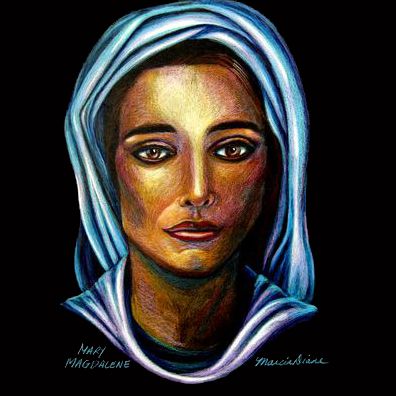
Mary Magdalene by Marcia Diane. http://www.marciadiane.net

Like a Nomad

We all need someone in our life who can shock us into a new way of thinking. That person for me is my youngest child.

He has always demonstrated a level of understanding the world in ways that seem to surpass my own. His even temper and clear headedness is enviable.

We had the need to take an overnight trip to do some work where our RV camper is this weekend. As we were loading up to come back home, he said to me, “you need to learn to pack more like a nomad!”

Well, what on earth did that mean? I got that he was frustrated by the volume of stuff we had to come back with. It was one 24- hour period after all. How much could we possibly need?

Apparently, in my mind, we needed all our juices and freezer items so we could eat “our food.” And extra linens in case I didn’t already have what we needed there. (There was PLENTY there, by the way.) And, well, all my toiletries even though the camper bathroom is so tiny, your knees jam up against the tub from the toilet and there’s room enough on the counter for a toothbrush or two and a bar of soap. And the cabinet is about an inch deep.

I knew that I was taking too much from home to make the trip “more bearable” for me, but I didn’t really think about it the way he does.

What’s the opposite of “like a nomad?” I asked him. We talked through it and landed on “like a colonizer.” He didn’t love that word but it struck me. And it struck me because it spoke to my need to make another place as much like MY home place as possible. And it seared through me because that position removes our openness to experiencing another place – or person – as it is, (or as they are.)

It reminded me of how much I despise the White Savior mentality of “doing missions” in the form I was exposed to in my youth – bringing salvation to a people group as if our culture was what would save them. It reeked of Christian Nationalism but it took years before I could step far enough back to see how unlike Christ our efforts were in that context.

So, next time I’m packing for a destination, I’ll remember the lesson in packing “like a nomad.” I do want to be willing to experience other places and other people authentically without comparing against my place or my ways of doing things. It’s in those times of temporary discomfort that we grow and can humbly recognize our place in the world and our connection to others who share it.

The Shoes

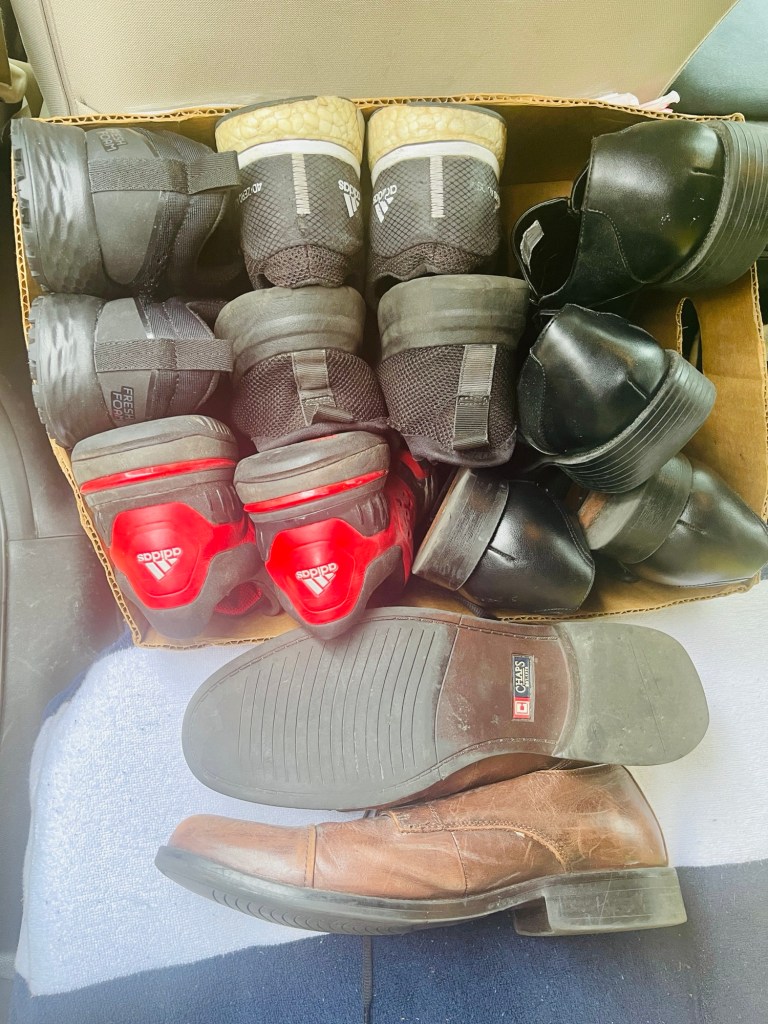
Today, I’ve packed up Joshie’s shoes – 7 pairs of them that have been upstairs at my house the past 7 years. After much turmoil and peacemaking, I’m putting them into the hands, or onto the feet, of other people.

He was a shoe lover, not unlike me. These were under no circumstances all of his shoes – just the ones at my house. If I may speak woo-woo language to you, I have heard their cries to release them into the world. And so today, they are released.

The thing that has to happen when you lose one so precious is an ongoing reconciliation with what’s left here. Everything – really, everything – takes on a level of importance that didn’t exist before. For that reason, any movement or removal of things can become rather ceremonious.

I’ve donated many, many things multiple times over the decades. Never before has it brought me to tears. Not for the loss of things, mind you, but for the absence of the one to whom they belonged. And for all the ways my own growth and movement through time on this earth requires such adjustments within and around me.

As for the shoes, may the one who needs them be drawn to them and may they imprint the earth once again, exchanging the energy of love and mercy, hope and joy with each step.

Old places, new me

Not too different from the way planets and moons follow their orbital paths, it becomes apparent as we age that we move through life in patterns that are familiar. If we pay attention, we can see our own growth in a moment of deja vu.

Today, I walked past what used to be Mort’s Trophy shop on Davie Street. Back in the 1980’s, I was hired by Mort – it was my first job. I was an engraver, using a very early version of a computer to set and print engraved plates. I was a terrible employee. One day, he walked into his secretary’s office with a customer and discovered me asleep under the desk. (His secretary was out that day … and I was apparently very tired because of my late night antics.) He didn’t fire me but we were both pretty mortified. (Get it? Mort and I were mortified!)

Adjacent to Mort’s was a Firestone station. I remember walking to work and being recognized by people in that parking lot as one of the performers at Fevers nightclub from the previous weekend performance. It felt good. That work (singing and playing keyboard in a local band) suited me better but I wasn’t making money doing it. So, I played music at night and worked at Mort’s during the day.

Both Mort’s and the Firestone station are being renovated now. They’re fenced off and being reimagined into something I can’t see yet.

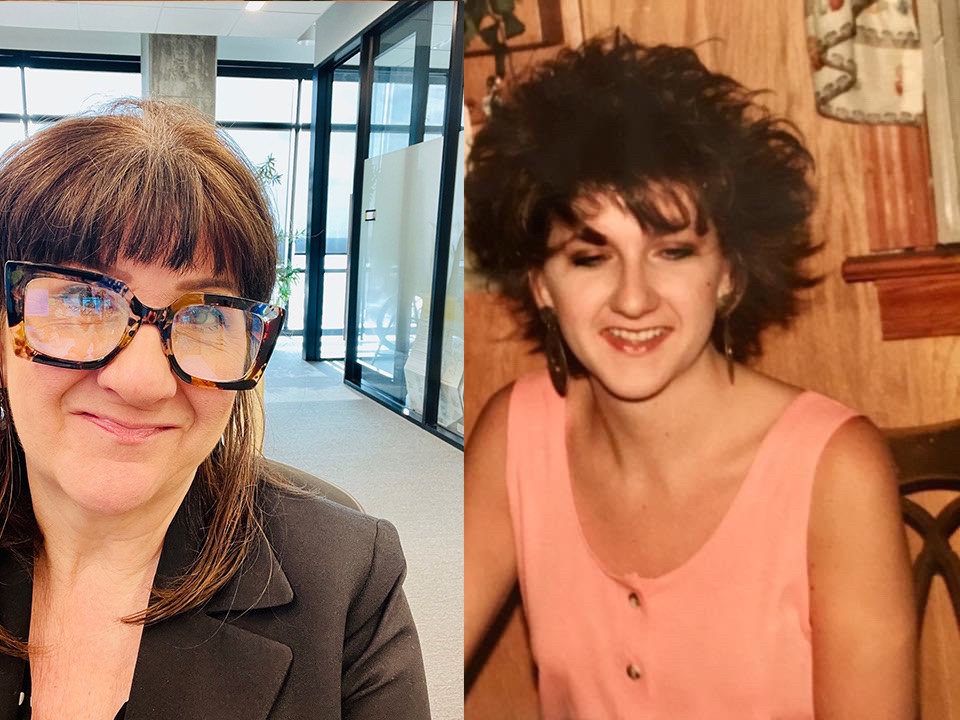
I couldn’t help but remember my 18 year old self as I walked past – and to recognize all the ways I too have changed since my life’s orbit took me through that particular place. Like a mother to a daughter, I regarded that young girl with love and grace and gave her a big maternal hug and told her how proud I am of how very much she has grown into more of her intended heavenly design. I laughed at the memory of sleeping under Hilda’s desk at Mort’s. And my 18 year old self marveled with proud excitement as I recounted the orbital path between then and now.

Today, we had a reunion

I’m inspired tonight as I look forward to the possibility of another encounter a few decades in the future between some forgotten version of myself and my future self. “Being made whole” is the name I assigned to my ministry and I think I understand why a little better tonight.

A rainy day reflection

We’ve all seen it. When an unexpected (or even an expected) rain shows up in the middle of an active day, people respond in comical ways to the prospect of being negatively impacted by getting wet. It’s an interesting thing to observe, not because of the face value cause-effect, but because of all the little things that lie beneath the surface. It can be stress inducing. But it doesn’t have to be.

Basically, it seems we can correlate our tolerance for getting wet in the rain with our determination or ambition to accomplish things regardless of circumstances. This correlation is not static by any means. There are days when we are more willing than others to endure the discomfort and changes to our physical appearance that result from getting wet. I’m just saying, our reaction to rain reflects so many things going on inside us.

I remember a time when my youngest was a preschooler and we had to go to Target on a rainy day. (This may have been more of a stormy day than just a rainy day.) I had one umbrella and hands full — handbag, shopping bags, and my little boy who held my hand as we ran to and from the store. When it was said and done, his pants and shoes were soaked. “How on earth did you get so wet?” I asked, implying that he should have been drier since we were both under the umbrella. “The rain has a little helper, Mom,” he said, “and its name is wind.”

Indeed, it does.

Recently at work, I was having a conversation about our human nature in reaction to doing difficult or uncomfortable things, particularly doing those things over a sustained period of time. Our purpose was to figure out ways to coach our team through an intense growth spurt. In that conversation, I used the image of a sudden downburst of rain to describe our general resistance to that sort of discomfort and change in circumstances. Most of us do not want to get wet. And we avoid it for myriad reasons, not the least of which is the way it changes our appearance – picture the “drowned rat” we refer to so often. We are far more willing to endure the inconveniences and discomfort of an absolute soaking when we have significant incentives that override the negative feelings about getting wet.

Soaked!

Today, my son and I were downtown having lunch together when the bottom fell out of the sky. The rain wasn’t just heavy, it was torrential. We had no particular reason to hurry and nowhere in particular to go afterward, so we weren’t stressed. And we didn’t have umbrellas. As we left the restaurant to head over to a nearby coffee shop, we passed several folks huddled in the foyer of the restaurant, waiting for the rain to pass. And, on the street, there were various mixtures of folks with umbrellas, makeshift umbrellas, and nothing (like us) to limit our getting wet. While in the coffee shop, it occurred to me that getting wet in the rain is a purely physical experience – a sign of life, if you will – with mental and emotional implications. In other words, the way we perceive getting wet unexpectedly in the rain drives our experience of it entirely. And we can change our perception of things.

It isn’t you, it’s your ego

Very often, the first thing you see in a situation doesn’t define it well. You think you’re dealing with a certain issue, but the real issue is hiding behind the one that shows up first. Maybe several layers behind.

Current example, I have found myself bucking hard against opinions over the last several weeks and months – unsolicited, random opinions in particular. I have become more and more outspoken about my notion that opinions are the lowest form of human communication. Opinions are like body odor to me: we all have them and we should avoid airing them onto others.

Why such contempt for opinions? Well, I thought it’s because I see opinions as nothing more than preferences. Your preference isn’t right or wrong. It’s just a preference. My preference isn’t right or wrong, either. It’s just another opinion. Weighing and reacting to opinions is a royal waste of time. I am highly protective of my life energy, so I avoid spending any mental or physical energy on futile exercises. I recommend the same for you.

But that’s not the whole story either. I’ll dive a LOT deeper than that, so come with me if you can handle it. I say that because getting to the deeper issue will get too personal and likely uncomfortable. It’s actually not personal opinions that I dislike reacting or responding to. It’s the ego hiding behind it. It’s the egocentric expectation that an opinion should somehow change what the recipient thinks, says, or does. It’s the egocentrism that is unable to acknowledge that there are myriad opinions and preferences and there isn’t one correct one. It’s the self-centered attempt to rid the world of anything one person doesn’t like or prefer or appreciate – at least the small sliver of the world that person occupies.

In Christian teaching, the ego is our enemy. The ego represents the false-face we develop and present to the world – our avatar, if you will. Following Jesus *requires* a complete turning away from the self-serving ego in order to follow the way of Love. Where ego seeks to satisfy itself and to defend itself and to grow itself in the view of others, humility seeks the exact opposite. We cannot feed our ego and our faith at the same time. We cannot follow our ego and Christ-in-us at the same time.

So, it’s not your opinion I’m bucking. It’s your ego.

If egocentric opinions are unwanted and unhelpful, then what does a humble opinion look like and is it more desirable? It looks more like constructive feedback. It considers the whole group, not just one person’s preference. It is offered only when requested for the purpose of growth, not thrown out unsolicited like a belch to relieve one’s personal need to release noxious gas. Constructive feedback is just that: constructive. It builds others. It builds communities. Humility is necessary in any community context because humility embraces its own transformation while the ego desperately resists it.

One's Ego Can Only Aggravate This Crisis - La Prensa Latina Media

christianespanosa.com

Re-entry: facing the world again

As the light at the end of the tunnel grows brighter in what we hope is a post-pandemic world, my eyes are squinting at the glare. My appearance reflects an undeniably exhausted and weary soul. I want to feel energized and excited, but it eludes me.

And, apparently, I’m not alone.

Photo by Liza Summer on Pexels.com

Countless articles and reports are highlighting our various forms of fatigue: mental, emotional, Zoom, etc. It’s important for us to understand that we aren’t alone if we’re feeling any or all of these things. It’s also important to differentiate between ways we can help ourselves and issues that need professional/clinical assistance.

Sleepiness has been a real bugger for me. I am typically good with 7-8 hours of overnight sleep. But I find myself pushing those limits with late-night social media surfing or shopping or news reading. If you question me about why I’m online so late, I’ll justify it with a claim that it helps me go to sleep. Problem is, it takes about 45 minutes to an hour of surfing before my eyes start to cross. And, by then, I’ve already ruined my sleep goal.

Experts recommend that we put an end to late-night screen surfing (TV or other devices,) ending those sessions an hour before we should go to sleep; maintain a consistent bedtime; eat a well balanced diet; and minimize naps. Of course, the nap thing is a vicious cycle. Naps have both saved me during this pandemic and simultaneously ruined me. Yet, I remain quite fond of them.

If your exhaustion seems out of the ordinary and you are concerned about underlying health issues, make an appointment with your primary care physician. It’s better to know as early as possible if you’ve got something treatable happening.

Emotional health has to be factored in as we attempt to navigate exhaustion, frustration, outrage, fear and disappointment. We want to rely on good advice, but the advice keeps changing. We want our fellow citizens to play by the rules, whatever they are for as long as needed, but some of our neighbors are hard-heads. We want to believe we are in a post-pandemic phase, but we know that variants exist, fall is coming, and we still don’t know anything for certain.

For someone who can experience an emotion, name it, and allow it to pass, this has been a roller coaster. We might have even learned a few new emotions. For someone whose default is to suppress, ignore, and deny feelings or emotions, this pandemic has been a recipe for explosive misfiring and unintended destruction of relationships. In either case, if you’ve been caught off-guard by an onslaught of feelings and emotions that you can’t handle, talk with a trusted friend or mentor or make an appointment with a trained and unbiased professional. I can’t promote the value of talk therapy enough. And, higher level therapy (prescription level, behavioral modification level) has never been more needed. Do not resist getting help at whichever level you need it.

Work instability, changes in hours, temporary sabbaticals, and moves to/from remote locations can be mind numbing. Nearly everyone has felt the sensation of having the rug pulled out from under us over the course of the past year+. And, if we’ve been fortunate enough to maintain a job, we’ve soldiered through all of these things with little down time. For those who lost jobs, everything is on hold. You might be looking at ways to change careers. You might be weighing between working a low-wage job and the high cost of daycare. Sometimes, that just doesn’t add up. For you, down time or vacation isn’t a real “thing” anyway. I know because I’ve been there.

I don’t know if you’ve tried to book any beach time for this coming summer, but it’s nearly impossible to do. Last year, it was impossible because of stay-at-home orders and potential losses due to sudden lockdowns. This year, it’s impossible because folks are FLOCKING to the beach for much-needed time away – and the resource is limited. We are competing for vacation and recreation accommodations. We have to become intentional and even creative in finding ways to rest, relax and have fun again. As one article put it, we have been robbed of our ability to be spontaneous. (I agree, except it happened to me from previous trauma. This just added to it.)

Walking has been helpful to me in several ways. It offers a certain reset in my brain, allowing me to experience endorphins and a pleasant alternative to screens. When I face those moments after work when I wonder if I want a nap or a walk, I always try to opt for the walk. And I thank myself later.

Do you have any suggestions for ways to cope with crawling out of this pandemic and all of the collateral effects? Do you need more recommendations? Drop a note in the comments. Let’s try to help each other with this re-entry and pray for a world that is healthier and kinder on the other side.

Speculation and anxiety

I’m an anxious person. It’s odd that my demeanor is typically that of a calming presence because underneath that smooth facade is some serious duck-paddling.

I struggle with what you’d call high functioning anxiety. It isn’t debilitating – it is, however, exhausting. At my worst, I avoid thought-provoking down time by busying myself to heroic levels. At my best, I exercise or take naps. In all cases, my anxiety feeds on the aloneness I find myself in during this single/COVID time in life. When I’m alone, my thoughts lead me to unanswerable questions.

It seems to me, as I listen to every American anchorperson on TV tonight discuss the outcome of today’s election in speculative terms, that speculation is the root of worry and anxiety. When we can’t know something, we fill in the gaps with speculation. We tell ourselves stories based on speculation – many of which are absolutely untrue – and we believe those lies we’ve developed.

If you’ve practiced this form of self-torture for any length of time, then you know how hard it is to undo. At the same time, once you learn to recognize the destructive pattern, you begin to see it more and more, making it possible to undo.

Anxiety has been and continues to be fed during this season of elections-wrapped-in-a-pandemic. Folks who aren’t typically bothered by anxiety are affected. Folks who suffer with it are manifesting some of their worst symptoms. So, how do we manage?

For me, it begins with making peace with the unknowable. Do I still imagine the worst case scenario? Absolutely – it’s how I’m wired. Rather than holding my scenarios as prophetic truth, though, I look at them as manifestations of my anxious worrying. I can set them aside. (I actually imagine the quantum theory range of possibilities and realize how arrogant it is to believe in my ability to accurately predict future outcomes. Please.)

Even more broadly, I believe in a loving and faithful God. I have questioned how to reconcile that love with some of the dreadful ways I’ve suffered in this life. But, when I remember the darkest times, I also remember being most certain of God’s love and presence when life was most uncertain. Awareness of the presence of God in Christ has been the hallmark of the most un-anxious times in my life.

As events unfold, I encourage you to see speculation for what it is and not to seize any of it as truth or fully predictive of outcomes. Feed what is good; talk about what is hopeful; live in a way that enacts love. Love wins while speculation predicts loss.