Our Thresholds

I’ve never experienced an actual “swirly” – you know, when someone holds your head in a toilet while flushing it – but life has lately brought that image to mind and I think I may know how it feels.

Another image has come to my mind during this particular stage of life – one of being stuck in a spin cycle (as in washing machines) that never ends. Do you wait for it to stop spinning and then go about your business? Or has something gone wrong with the machine and will the spin cycle continue until you somehow intervene?  And then, this illustration reminds me of those dark, late nights when I’ve been stopped at a light for a really long time (probably 20 seconds) for absolutely no good reason because no one else is on the road. I know what I do in that scenario, but what do you do? Sit and wait, or get on with it despite the red lights in your face?

If you know me, you know I love theological reflection and making connections to life as it really is. (I add “as it really is” as a nod to my upbringing which paid constant homage to “life as we think it ought to be.”) When my mind begins conjuring images, like the swirly and the spin cycle of my washer, I know it’s time for me to pay attention to the Spirit of God. Something life-giving is happening and God is trying to help me understand it.

liminalspace
from the-liminal-space.com

There is a Latin word, limen, which means “threshold.” From it, comes two terms you probably have encountered before: liminality and liminal space. The concept has been applied to literature, anthropology, psychology, theology and other “‘logies” because it is so rich metaphorically. Basically, liminality and liminal space both take the concept of a threshold and apply it to times of transition, ambiguity and waiting. In theological terms, it becomes a time of growth, learning and spiritual transformation if the person experiencing it embraces the opportunity.

So, what do you do in liminal space? If I make the comparison in my own life to stoplights late at night, then I “bust” through without any regard to legalities in favor of my own comfort and perceived safety. If I compare it to being stuck in a spin cycle, then I apparently stay, hoping and praying that the spinning will stop soon.  I don’t think the swirly comparison applies … that one was probably allowed through just to grab my attention. 🙂 What I can’t ignore in either comparison is the presence of fear.

Fear can either cause us to run impulsively (stoplight) or it can paralyze us (spin cycle.) I suppose for me, this particular liminal space is designed to help me work through some previously unnoticed or unnamed fear.

Today is still early in this year’s season of Lent. If you find yourself in a period of liminality in your own story, I encourage you to embrace this opportunity to pursue the freedom that comes in working together with God to become the man or woman you were created to be. Whether you are wrestling with fear, or an unforgiving spirit, or an unloving attitude, or whatever else, this could be just the space you need to transition to the next phase of your life.

Our love-hate relationship with fear

Our hearts cry today for and with the people of Paris. pray-for-paris-1The effects of terrorism are not foreign to us. We still feel the anger and the grief from 9/11 acutely. Days like yesterday remind us of that. Because the impressions of September 11, 2001 are so deep, we have the ability to feel for our neighbors in France who are suffering in November of 2015. I would like to say that we feel the way we do today because we feel compassion and sadness when we see atrocities or injustices anywhere, but that’s not the case.

Terrorism, you know, doesn’t only occur when ISIS or al-Qaeda or Hamas or name-your-least-favorite-Islamic-terrorist-group plans an attack on Westerners. Terrorism has existed as a tactic of fighting to impact economic, military and religious power balances since some-ancient-somebody figured out you can effectively use fear to manipulate another person’s resources and/or decisions. While the media makes it hard to miss in certain instances these days, terrorism has been happening our whole lives. Heard of the KKK? Yeah, they’re terrorists, too. Remember Tim McVeigh in Oklahoma City? Terrorist.

The whole point of terrorism is psychological warfare. Have you ever considered how far we are willing to go, when we are afraid of something, to protect ourselves from it – whether or not it really exists or is actually happening? Well, if you haven’t, please know that terrorists have. And what they understand about human responses to fear drives their strategic planning in whatever war they choose to wage.

I haven’t been on a plane since 2000. Want to take a guess why? My reaction is small potatoes. One person’s outcome. The effect of 9/11 on us as a nation? Immeasurable.

American culture is confusing. We encourage and indulge fear as evidenced by our love of horror movies as a means of entertaining ourselves. (Not me, by the way. I hate those.) One word: Halloween. We appear to love violence if you judge us by our entertainment appetites. We come across as not being afraid of violence or death. (Zombies DO scare us, apparently.) Consider the violence in schools, for instance, that we have witnessed just since Columbine. We fail to take seriously the gunmen or their social media manifestos and cult followers. We certainly don’t fear them. We just assume they’re crazy. And we hope there aren’t more of them out there. (There are, by the way.)

Terrorists resort to terror when the enemy cannot be engaged by traditional means. Controlling or harming the enemy through traumatic fear becomes the “best option” if war is to be fought.

So, if a) social media isn’t going away, which means, from now on, we are going to know all the way-out, incomprehensible things that happen on earth as soon as they happen, and if b) terrorists have always been and will remain a part of the landscape until all of creation is restored under Jesus, then what are we supposed to do? Hope to avoid terrorists and acts of terror? Just resign ourselves to being bullied by fear-mongers? Pretend it isn’t a real threat because we haven’t been personally hurt?

It’s probably safe to say that we continue to try all of those things. I think it’s important to remind each other that God DOES care about what is happening here. We pray for those families who have lost loved ones and for those who are injured when tragic events like yesterday’s terrorist attacks happen. It’s rightfully our first response.

For those of us who believe in prayer wholeheartedly, we pray believing that God will answer and be present for those who are hurting. We pray believing that God will intervene and good will come. We pray believing that, as we pray, God will transform US. We pray for peace, believing that the God who instructs us to “fear not” will actually build a faith in us that can move mountains. We pray for healing and restoration, believing that God’s love is the answer to all our suffering. Then, after all of that praying and believing, we walk out into a sometimes terrifying world and spread some perfect love, which, according to the God who loves us perfectly, casts out all fear.

A Mother’s Day meditation: bringing color into a gray world

There’s a lot to be said for the innocence of youth. When we’re young, we take life at face value, not looking for lost or hidden meanings and conspiracies. Before innocence leaves us, if someone gives us a card that says “Be My Valentine,” we simply say “thank you,” or else give the person their own valentine card in return. Done.

Today, I find myself mourning that innocent acceptance because, once it’s gone, once we begin to see injustices or inequalities in everything, the world loses a lot of its vibrant color and becomes a tad more gray with each similar experience.

That change of perspective may begin with some heartbreaking rejection by friends or someone you admire as a kid, particularly on a day such as Valentine’s Day. It may start when everyone in your class brings their mom to school for a Mother’s Day tea, but your mom won’t come for some ridiculous reason … and you learn to resent her for being unavailable and you resent the holiday from that day forward.

So, I now know friends who learned to hate some of our cultural holidays as children. As a child, I didn’t have any negative holiday experiences. I didn’t feel any of those things until much later in life – the first one being Father’s Day, as the pain my children felt due to an absent father settled into my heart, too. I hurt for them, because their experience was so vastly different from mine.

So goes the spiral out of blind innocence into seeing the pain of others and becoming sensitive to the things that trigger their pain.

Fast forward to decades later. Now, living life as a minister, I walk alongside people in varying positions along this continuum: from those who still see our cultural holidays and expressions through the innocent eyes of a child, cheerfully and dutifully honoring each and every recognized holiday all the way down to those who see agony and despair in almost every one that rolls around. (Labor Day is a good example of a rather benign holiday.) The latter view typically comes from a combination of personal experience with pain and a highly sensitive barometer on the pain of others. Of course, as you might expect, the majority of us fall somewhere in the middle of that continuum.

The trick is to learn how to navigate in such a way that acknowledges both the joy and the pain – not just in holidays, but in life generally. While it is a sign of maturity in spiritual terms for us to become sensitive to the experiences of others, we must not let our experiences with pain strip the world of its vibrancy, its bright and beautiful color. Hope, love, peace and joy – they all continue to exist in, around and through our painful experiences.

http://photobucket.com/images/color%20splash
I pray that I am enabled by God’s Spirit to bring some of the brightest blue of hope, fiery love, hot pink joy, or golden peace with me into the gray spots of life – not just for myself, but for others whose world has turned gray. I pray that all of us who easily see pain in others learn to bring color with us into the gray.

Opening the Door to Hope

Starting anything new has inherent hazards. Starting a new ministry has the same hazards as starting other new ventures with the added weight of operating in the realm of faith-over-feelings.

In listening to the stories that others have shared with me, both directly and indirectly, I have discerned that many of us hold a certain amount of hope after enduring painful or otherwise difficult life circumstances. For people of faith in Jesus, that hope is tied to a belief that “all things work together for good.” We take that to mean that great value and understanding can come from our experiences of suffering. Even more directly, we believe that we are transformed by the work of God the Spirit during these experiences of suffering. It is the process of transformation by the Spirit of God that brings us hope and that hope is the most important ingredient in the building of our faith.

HopeAfter having one pilot session in Raleigh, NC – Opening the Door to Hope: Spotlight on Addiction – we are now looking for churches to host several more pilot sessions. During these sessions, ministers, lay leaders, members and guests will gather to discuss the concept of developing Hope Ambassadors through the training ministry of Opening the Door to Hope. These Hope Ambassadors will be at the forefront of congregational and non-traditional ministry settings, serving families that suffer under the effects of addiction, depression and other related illnesses in all various and destructive forms. (NOTE: These sessions are not meant to serve as rehab or therapy for addicts or for those who are suffering with depression. These sessions are for church leaders and family members who want to learn about these diseases and learn about ways to offer support, resources and encouragement to loved ones who suffer.) Proposed Spotlight topics include: Addiction, Depression and Grief Support.

At least, that’s the idea. That is my hope.

That is the dream that has developed over the course of 10+ years. At worst, those in attendance will garner tools to effectively activate hope in their own lives and in the lives of those in their spheres of influence. At best, Hope Ambassadors will begin to appear in congregations all over the world among people of faith in Jesus, offering the same hope and healing that Jesus offered during his earthly ministry, doing even greater things, even as He promised we would.

I know about the chaos and the stress that surrounds loved ones suffering with addiction or mental illnesses – those that have been diagnosed as well as those that have not. I know what it’s like to lose someone you love dearly and I know what it’s like to see God transform and heal someone you love dearly. I know what it’s like to be transformed from the inside-out! I, too, have hoped that my experience would bring good on a larger scale through the process of transformation.

In that context and from that perspective, I lift up the banner of hope.

If any group of people on earth should understand hope, it should be my fellow followers of Jesus. However, my experience shows that church members are generally ill-equipped to offer hope to hurting, desperate people. A lack of education, partnered with bad advice and a code of silence regarding stigmatized behaviors in the church has left many of its members in situations of prolonged suffering and marginalization. People are suffering

Too many people and too many families are suffering for the church to continue on this path. This need is much broader than any denomination. In Jesus, we find all the hope any of us could ever need.

The church must be a place where hope is experienced and taught and nurtured.

And the church is not the building where we gather on Sundays to worship. The church is the people who do the gathering and the serving and the worshiping and the praying … and the hoping. Wherever those people go.

Offer HOPERomans 8:24 For in (or by) hope we were saved. Now hope that is seen is not hope. For who hopes (or awaits) for what is seen?

Hebrews 11:1 Now faith is the assurance of things hoped for, the conviction of things not seen.

**If you are interested in the Hope Ambassador ministry project or would like to participate as a pilot group member, please leave a comment here with an email address whereby you can be contacted.

Changing gears

I drove a bus when I was 16 years old. That’s right – a school bus.

Mind you, I wasn’t the bus driver who picked kids up along a 10-mile route every morning and drove them home every afternoon. I was the kid who drove the French class over to the high school in the next county because our school no longer had a foreign language teacher. (And yes, we took French, not Spanish … I have no idea.)

Anyway, that’s one of several proofs that I learned very early to do things that most kids these days don’t have a chance to learn. I knew how to change gears manually right away as a new driver. And, by the way, if you’ve never been a gear-changer, you don’t know what you’re missing! (This really is off-topic, but I also learned how to parallel park – and do it well. My dad installed two poles in our yard and I practiced parallel parking between them with his Ford F-150. Like a champ. And I can still whip it in there in one smooth move.)

There’s a certain art to changing gears manually. You have to learn to catch all the cues your car gives that it’s time to change – the readings, the sounds, the feel … Then there’s the coordination of your hand and foot. Your right hand and both feet, really. In those moments, you are in sync with your machine. Automatic gears bypass all that visceral connection. Shame, isn’t it? gears

(Another off-topic comment: the only time I drove a manual car and wished desperately for an automatic was when, at the tender age of 21, I spent three weeks in England with my cousin during which time we rented a car for a Saturday night outing in London. Shifting with my left hand and operating both feet and a steering wheel from what I knew as the passenger side was a real challenge. I managed it, but wow …)

Sometimes, I think having learned to pick up sensory clues about the right time to change gears in driving may help us know how to tune in to the cues for timing changes in life. [Disclaimer: this has not always been evident. I have demonstrated rotten timing in my life. Burned out a few proverbial clutches, if you know what I mean.] But, if we really tune in, I think we can see, hear, and feel the signs that it’s time.

Three signs that you are changing gears at the wrong time:
1. You move ahead before finishing what you started
You immediately notice that the vehicle is not moving forward and may actually shut down. This means you may have thrown things into high gear way too soon. Go back into the lower gear and regroup. Spend some more time at each level. Be more thorough and less anxious.

2. You aren’t living up to your potential
Your engine is screaming and other drivers are shaking their heads as they drive past you. Please, go into the next gear. There are at least five of them, you know. You’re really missing out if you never open up past third gear. You don’t necessarily have to move fast to get somewhere. But don’t put yourself in a position to always be passed, either.

3. You sabotage the process
Hear that terrible sound of stripping gears? That’s you, forgetting to push in the clutch while you change gears. The clutch protects your transmission while the gears are changing – if you engage it. If you choose to change gears without it, then you’ll ruin your transmission. That means you won’t be able to move. Think of prayer as your clutch during those times when you sense it’s time to change gears.

Come on, let’s go for a ride! Bon voyage!

One on the right and the other on the left

I’m not entirely sure why, but I haven’t been thinking or acting like myself lately.

I could list a few things that have happened to make me less happy about my circumstances, but I generally am a plow-through-it type of girl. I recognize the value in change as well as the difficulty of transitioning. I get it. I had lunch with a friend who is a few years older so that I could explain to her what’s going on with me and we could bounce around possibilities together of why I feel so out of sorts.

Whether it’s raging hormones or exhaustion or general discontentment, I don’t know. I just know I feel caged and irritable.

And this is how I spent Lent this year. Totally not what I wanted to happen. I love the spiritual disciplines and theological reflection. I adore spending intimate time with God and pouring out my heart and touching the hope I find in God’s presence. But I have spent more time searching for a way out of my predicament than I have in seeking God.

As I have tried to enjoy a day off from my full-time job today preparing for tonight’s worship and attempting again to be intentional in my devotions, I can’t shake my feelings of irritation.

I have prayerfully projected images of my feelings into things like being in prison. In those prayers, my thoughts flow like movies. I sit in a cell, but Jesus reminds me that, long ago, the door was unlocked. I am free. But I haven’t left yet, because

I’m afraid.

I sit in this spot as if I’m locked up because, at least here things are predictable. I know what’s coming in, what has to go out, and when all those things have to happen.

Perhaps you know how this feels. Perhaps you’re in the next cell.

Jesus remember meToday, my reading has been, predictably, Luke’s story of the crucifixion of Christ.  In chapter 23, Luke relays the story of Jesus going to Calvary along with two criminals who were sentenced to be hung with him – one on the right and the other on the left. For those who know the story, we know one as the blaspheming criminal and the other as the penitent one.

As they were hanging there – the three of them – and soldiers and onlookers hurled insults and mocked Jesus, one of Jesus’ neighbors on the crosses yelled over to him, “If you are the Christ, save yourself, and us!”

And, sitting here in my little cell, a prisoner of another sort, I understand why he said that. Here we are, right beside Jesus Christ. He has proved himself. Everybody knows what Jesus can do. Why are we all still hanging here in this predicament? Why aren’t you saving yourself? If you refuse to save yourself, then does that mean you won’t do anything to save me either?  The guy was miserable and there was Jesus, the one who could turn things around, right beside him.

When we are suffering, or otherwise struggling with something, we feel desperate for a Savior. We have our own pictures of what that salvation should look like. As it turns out, our ideas of salvation pale in comparison to the gospel of Jesus Christ.  We want our Savior to get off the cross and come take us down off ours, too.

We don’t want our Savior to die right beside us.

In our human experience, death is the end. At least, it is the end of life as we know it.  But our Savior knows better. Jesus knew the glory that was set before him, even while he endured suffering. He knew. Even when he was dying. It wasn’t too late. His death didn’t mark the end of living. It was the end of dying.

“Lord, remember me when You come into Your kingdom,” said the other criminal after he reprimanded the guy who just wanted to get off that blasted cross.

Yes, Lord. Remember me.

Mini-blog: how loving the “other” brings unity

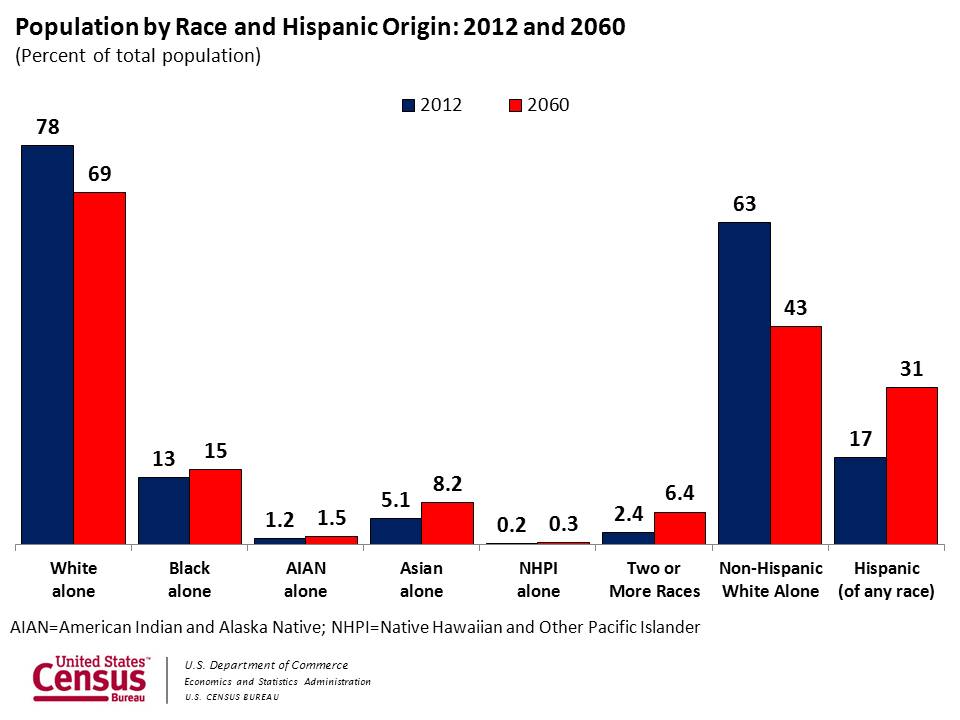
I live in a very small, culturally diverse neighborhood. This has become true over the past 15 years. My recent frustration with late-evening yard parties blaring music that makes me question where I am, led me to some wrestling with the idea of diversity and its value in a Christian context.

racehispanic_graph
Growing up back in my rural community, there was no real diversity. Most folks were some measure of kin. Even in our strictly black-or-white communities scattered across the county, many of us were kin. We went to the same schools, we all went to church regularly (many varieties, but 99% Christian churches), we knew the same people and repeated the same stories. We were, it would seem, the opposite of a culturally diverse community.

Coming from such homogeneity, one might be easily disturbed when diversity becomes one’s neighbor. Or shares a pew at church.

Speaking as someone who came from a homogeneous (but not necessarily unified) background, I can understand the difficulty in transitioning into a diverse landscape. Speaking as a girl who challenged homogeneity and created her own brand of diversity, I can also see the value of that transition.

The journey toward diversity is ideally a journey that culminates in true unity and not diversity for diversity’s sake.

Perhaps a homogeneous neighborhood or faith community gives a false sense of unity. Perhaps, until your surroundings become diverse, you aren’t challenged to find true unity with your neighbors. Or the person on the other side of the sanctuary. Perhaps true unity exists underneath a diverse exterior.

True unity requires that we give up our pride in “self” and bear up the dignity of the “other” with the same love we so easily give to those who merely remind us of ourselves.

Matthew 5:46-48 (NET)
46 For if you love those who love you, what reward do you have? Even the tax collectors do the same, don’t they? 47 And if you only greet your brothers, what more do you do? Even the Gentiles do the same, don’t they? 48 So then, be perfect, [brought to its end; finished; mature] as your heavenly Father is perfect.

Give It Up

It’s that time of year again – time to figure out what to give up for Lent. Of course, not everybody does that, but if you live and work around Christians of any variety, you’ll surely run across someone who is abstaining from something you might generally know him or her to enjoy.

20140305-221037.jpgIf you ever find yourself interested but in need of help figuring out how to begin the practice of sacrificing something for Lent, then your answers are as close as your computer. Last year as the season of Lent approached, a CBS affiliate in Charlotte, NC published a list of the top ten most popular things Americans give up for Lent. You’ll probably find no surprises there. The list might be helpful or interesting to some. However, the list of things people typically give up doesn’t give good clues about why Christians make these intentional sacrifices for the 40 days before Easter.

And isn’t it more important to know why?

Growing up in rural North Carolina in what I would call a blended Baptist church – mostly Southern Baptist believers with a sprinkling of “charismatics” withholding tongues in public worship – we never talked about or practiced any form of Lenten sacrifice. We didn’t even acknowledge the season of Lent or the liturgical calendar outside of lighting Advent candles during the four Sundays before Christmas. As far as I was led to believe, Catholics worshiped Mary and weren’t even real Christians, so why on earth would we feign interest in following any Catholic practices?

After studying the history of the Church (before and after the Reformation), I find myself in a far more ecumenical place. And I’m so grateful for my fuller understanding of the Christian faith and tradition.

The tradition of fasting in the season of Lent started as early Christians prepared for their baptism, which occurred on Easter Sunday. During those days – not always 40, but always some number – before Easter, new believers fasted and prayed. Other believers joined them as a sign of unity in the Body of Christ. The practice is not mandated in Scripture, however, the tradition is strong and earliest Christian writers documented it. Though details of the practice have evolved across eras and lands and subsets of Christianity, the focus has remained: Lent is a season of prayer, confession, and remembering (or getting ready for) one’s baptism in preparation for the celebration of Easter – a time to acknowledge the mystery and the power of the death and resurrection of Christ and how it impacts our lives.

A large majority of Christians will give up things like Facebook, or soda, or chocolate this Lenten season. And you will likely hear or read some criticism of those supposedly shallow sacrifices. Lent isn’t meant to be a 40-day diet plan. However, if you find yourself addicted to certain foods or substances and feel that this is a great transition period in your faith journey toward a greater consciousness in making healthy, wholesome choices in your physical life as an outward manifestation of increased spiritual devotion, then I say go for it.

I began my Lenten fasting several years ago by giving up certain foods I became convinced were bad for my physical body. And, after Lent was over, it was clear that I had given up those things for life. Even though it involved giving up physical things, I count the practice as spiritual because my purpose was entirely toward being made whole in the fullest sense of the word – mind, body, and spirit – and because I believe God called me into it. It was and is an experience of participating with the universal Christian community and with God Almighty. In other words, the practice of fasting is transformative.

Wherever you find yourself in terms of spiritual growth, give yourself an opportunity to experience transformation through spiritual disciplines such as fasting.

Is something still holding you back? Give it up.

The helping profession: giving and receiving

As a woman who daily serves others in business and in ministry, and who has for many years, I know a lot of people whose mission it is to help others.

It is no secret that a large majority of those drawn to help others have experienced significant brokenness in his or her own life. (If that was a secret, “SPOILER ALERT!”) While our stories of calling into ministry or work as a helping professional are many and varied, it seems to me that, for the most part, the decision to help others helps us make sense of our own pain and brokenness.

Counseling classes in graduate school were like therapy, and by design. Class time and homework assignments were our opportunity to really work through some significant areas of damage and scarring in order to find growth and healing. Key memories – things that stand out from your early years, even if they seem ordinary and insignificant – were always interesting starting points for me to dig through my unique brand of screwiness.

I remember clearly my dad scolding me as a ‘tween when he learned I had gone to school without a coat, saying, “You have to take care of yourself!” with an emphasis on the “have to.”

As a young adult, I learned how true that statement can be. Even into my later adulthood, I reluctantly admitted that I am the only person who can or will take care of me. Please don’t misunderstand that statement: I love and am loved by many people, but, in my adult life, I have not been the recipient of much ordinary care-giving. I qualify that with “ordinary,” because I have been well cared-for and cared-about in many extraordinary circumstances. But certain key people I thought would (or should) take care of me have failed me in devastating ways. In spiritual terms, I have felt loved and cared for by God, manifested in both ordinary and supernatural ways. Somehow, though, I developed an “I don’t need you” persona in my everyday, natural life. I’m sure it developed as a defense mechanism, but it doesn’t serve me very well.

Photo from www.lorinbeller.com
Photo from http://www.lorinbeller.com

As someone who has pledged to care for and serve others, I must consistently address my embedded sense of having to take care of myself, which is sister to a sense of distrust. I have years and years of independence and single parenting behind me that scream louder than any of my subtle hints at needing anything from any other human. That loud, screaming, self-sufficient ego prevents me from the vulnerability needed to become a community insider. It doesn’t prevent me from leading in certain contexts, but it keeps me on the margins of intimacy within my community if I am not diligent to make myself vulnerable – not just to God, but to at least a few people in my circle.

Now, believe me, I’m not alone in this little secret habit of giving without receiving. In ministerial or helping profession leadership positions, it is not advisable to make yourself entirely vulnerable in a very broad sense to the community in which you serve, but it is highly encouraged to find an inner circle wherein you can “break it all down” and allow someone to care for you and help with your emotional and practical needs.

Speaking on behalf of my fellow helping professionals and ministers, I want to encourage you to show an extra bit of care this week to those people in your community assigned or ordained to take on any role of service. They may never ask for it in an entire lifetime, but when received, it is of enormous value and encouragement! Three cheers, hugs, (and a dozen roses?) for the helpers!

What we see vs. what is true

new-way-of-seeing-thingsI love Malcolm Gladwell. You might even call it a celebrity crush. One of my dearest friends turned me on to him a couple of years ago when he was a guest speaker at High Point University. In one listening session, I was hooked. After the broadcast of his interview with the University President, I purchased my first audio book of one of his many bestsellers, “Blink.”

[I’m sure avid readers have mixed feelings about audio books, but I’m a fan for this reason: you can experience a book narrated in the author’s own voice and with his or her own inflections and emphases.]

Since then, I’ve continued to read whatever I can that Gladwell has written. I was excited most recently to listen to his TED talk that came up via podcast as he promotes his new book, David and Goliath. He is a brilliant writer, but the thing I love the most is that he thinks and pursues questions from the perspective of a sociologist and a journalist.

I could go on and on about why he is my favorite writer, but I won’t. I will say that I have actually considered ways to possibly meet his sister-in-law, who is also a minister, so that I could meet him. I know – I’m on the verge of “creepy” there. I think a few talk sessions with MG might be all I need to move into the realm of writing I dream about … Reminds me of my 21-year-old self before I moved to MPLS to meet Prince. Oh, my.

Today, I stumbled upon an article by Gladwell in Relevant Magazine. I was immediately excited by the title, “How I Rediscovered Faith.” Please take a moment to check it out by clicking the embedded link in the title.

Gladwell, in his faith journey, recognizes something that I also learned back in 1995 when I committed to live a life of faith in Jesus as a young adult. He describes a life-changing experience that gave him insight into the strength of spirit in everyday people who maintain their faith in God. Like so many of his writings and interpretations, Gladwell brilliantly contrasts perspectives using very clear examples. His examples are usually historical, often provocative and, for me, always interesting.

As I recall my own life-altering experience that gave me a new perspective on how Christ followers are empowered to live in a way that honors the risen Jesus, his story example in the article challenges me. Hearing the stories of persecution of people of faith leads me to consider how the church today seems to see itself and our responsibilities to our neighbors. We get so caught up in the MOST TRIVIAL aspects of life as a church/club that we lose sight of things as they are … and the power we have been given to make a difference as the hands and feet of God on earth.

I haven’t gotten my copy of David and Goliath yet, but after reading this article, it’s in my online shopping cart.