

The way we experience events and circumstances in our lives has everything to do with the perspective from which we look. We can think of that perspective as our personal operating system if you like computer language. When we are faced with circumstances that are difficult to comprehend, we can easily fill in the empty spaces of our understanding with stories we tell ourselves that are simply not true. And the danger of believing false assumptions is that we not only tell these stories to ourselves – we might share them with others. It’s a shortcut in our operating system that causes us to believe the story we manufactured to fill the empty, unknowing spaces.
In John 20:1-18, we read the gospel writer’s telling of Resurrection morning. From our reading, we know what Mary’s purpose was on the early morning that she arrived at the tomb of Jesus. She was coming to care for his dead body by anointing it with spices – something that couldn’t be done over the Sabbath.
Mary’s intention was an act of deep love. We can imagine that Mary was in a very difficult frame of mind when she arrived at the location of Jesus’ tomb early that morning. Remember, she saw Jesus die on the cross. She remained after others had left. She knew the dangerous situation she and the other disciples were in as followers of Jesus. So that morning, when she saw the stone was removed, she responded by making assumptions that were, frankly, very understandable given the circumstances. She assumed Jesus’ body had been taken. She had obviously already imagined that possibility and it was something she feared. So, she ran with it. Literally. She told herself a story of what PEOPLE were doing and then she took THAT story to the disciples. They have taken the Lord out of the tomb and we do not know where they have laid him. Mary saw Jesus’ absence in the tomb as the work of MEN. She couldn’t see. Not yet.
We all approach our trauma in different ways. And we all carry beliefs that limit our ability to perceive what God is doing when God is doing a new thing. When our limiting beliefs about what *can* happen are challenged, it takes a while for us to believe what we are really experiencing or seeing.
Mary, already broken by the death of Jesus, told herself a story about his missing body that morning that she believed to be true: someone took the body of Jesus away and she didn’t know where they put him. She just wanted to know where he was so she could go tend to his body. Her love compelled her to honor him that way. That’s why she remained in despair as she heard the voice of the man she assumed to be the gardener outside of the tomb. “Woman, why are you weeping?” It was the same question the angels asked her. “They have taken away my Lord and I do not know where they have laid him.” This version of the story tormented her. Immediately Jesus asked, “Whom are you looking for?” Mary replied, “Sir, if you have carried him away, tell me where you have laid him, and I will take him away.”
And then it happened.
That’s when Mary’s ears heard the voice of Jesus, calling her by name. “Mary!” “Rabbouni!” she responded, recognizing the voice of her beloved teacher and friend and Lord. Her tears of despair and grief were instantly turned to tears of elation and joy! This was the moment when Mary’s vision turned from what she believed people were doing to seeing what God had done and what God was doing! The one who died was now alive and standing in front of Mary.
The scripture tells us that Mary, the first person to share the good news of Christ’s resurrection, said these words as her testimony to the other disciples: “I have seen the Lord!” Friends, our testimony about Jesus’ resurrection is an ongoing story that begins with “I have seen the Lord.” Sometimes, those words are enough. Sometimes we might also say what we have seen the Lord do. But when we say we have seen the Lord – we have seen Jesus – we have seen the risen Christ – we are still testifying to the resurrection.
What is your story that begins with “I have seen the Lord!”? I encourage you in these days of trauma – threats of war, economic unrest, threats and acts of violence, injustices and abuses of power – to look for what God is doing. Don’t frame the stories you tell yourself and others by what you see other people doing.
See and say what God is doing.
Look for what God is doing.
Participate in what God is doing.
Align yourself with what God is doing.
God is doing a mighty thing – even and probably most importantly in the days when darkness seems to have overcome us – God is at work in the world for good! From that place of seeking God, you too will testify as Mary did. Let these words move you from tears of sadness and worry to tears of elation and joy: I have seen the Lord!
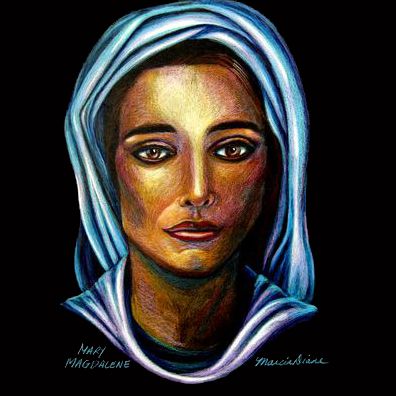
Mary Magdalene by Marcia Diane. http://www.marciadiane.net
 The effects of terrorism are not foreign to us. We still feel the anger and the grief from 9/11 acutely. Days like yesterday remind us of that. Because the impressions of September 11, 2001 are so deep, we have the ability to feel for our neighbors in France who are suffering in November of 2015. I would like to say that we feel the way we do today because we feel compassion and sadness when we see atrocities or injustices anywhere, but that’s not the case.
 Finding a new "normal"